
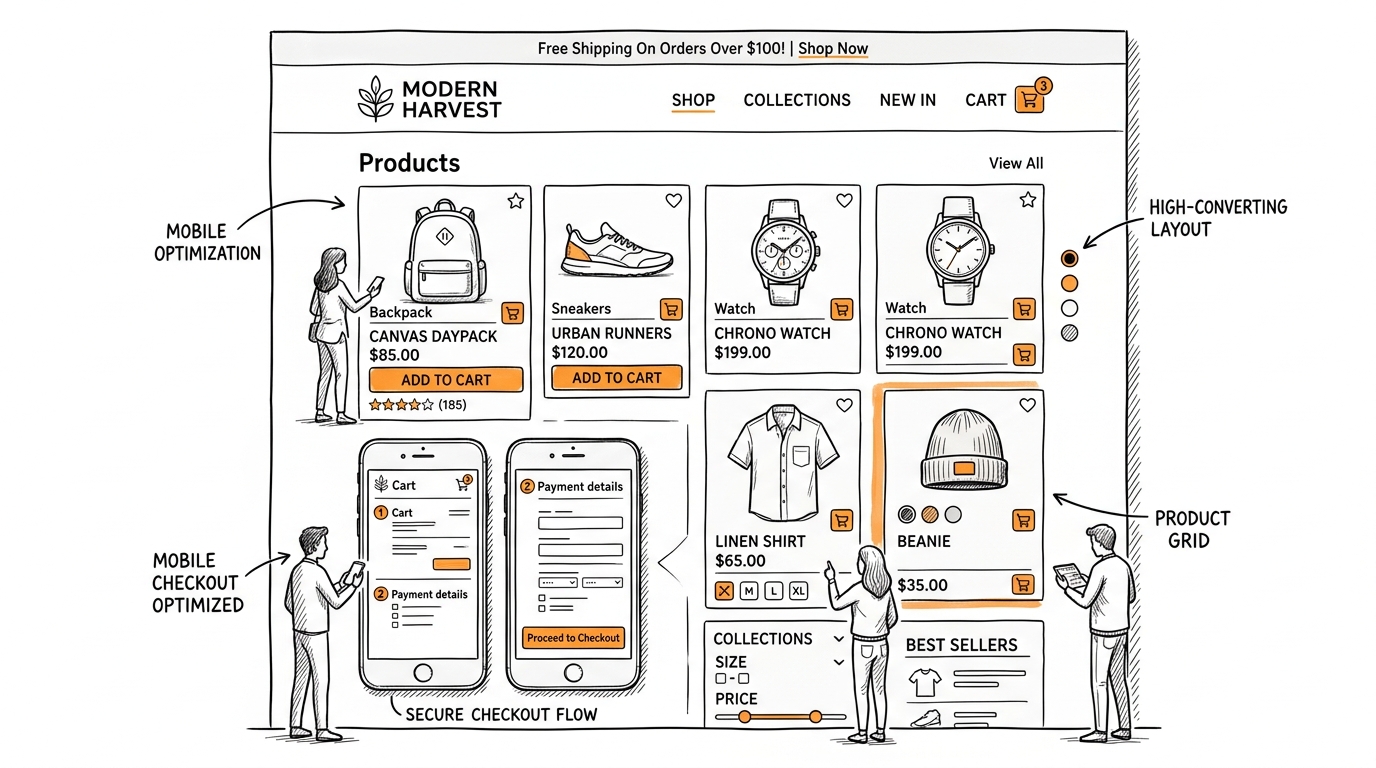
In 2026, customer acquisition costs across paid advertising channels have surged by more than 40%. For independent merchants and enterprise direct-to-consumer (DTC) brands alike, the era of relying solely on brute-force advertising spend to drive profitability is decisively over. The modern growth frontier has shifted entirely to on-site conversion rate optimization (CRO) and deep technical storefront performance.
"Most store owners mistakenly obsess over top-of-funnel ad creatives while letting over 95% of their incoming traffic bounce due to micro-frictions, unoptimized Liquid templates, and bloated third-party app scripts," explains Marcus Vance, Lead E-Commerce Architect at Denovo. "The highest-leverage revenue lever in 2026 is eliminating latency and cognitive friction between customer intent and order completion."
Eliminating checkout friction: The 1-click paradigm
Cart abandonment remains the single largest leak in digital commerce pipelines. Comprehensive industry tracking conducted by the Baymard Institute Cart Abandonment Research reveals that over 70% of digital shopping carts are discarded before payment completion. Complicated guest checkout forms, unexpected shipping calculations, and mandatory account registrations represent the overwhelming majority of lost transactions.
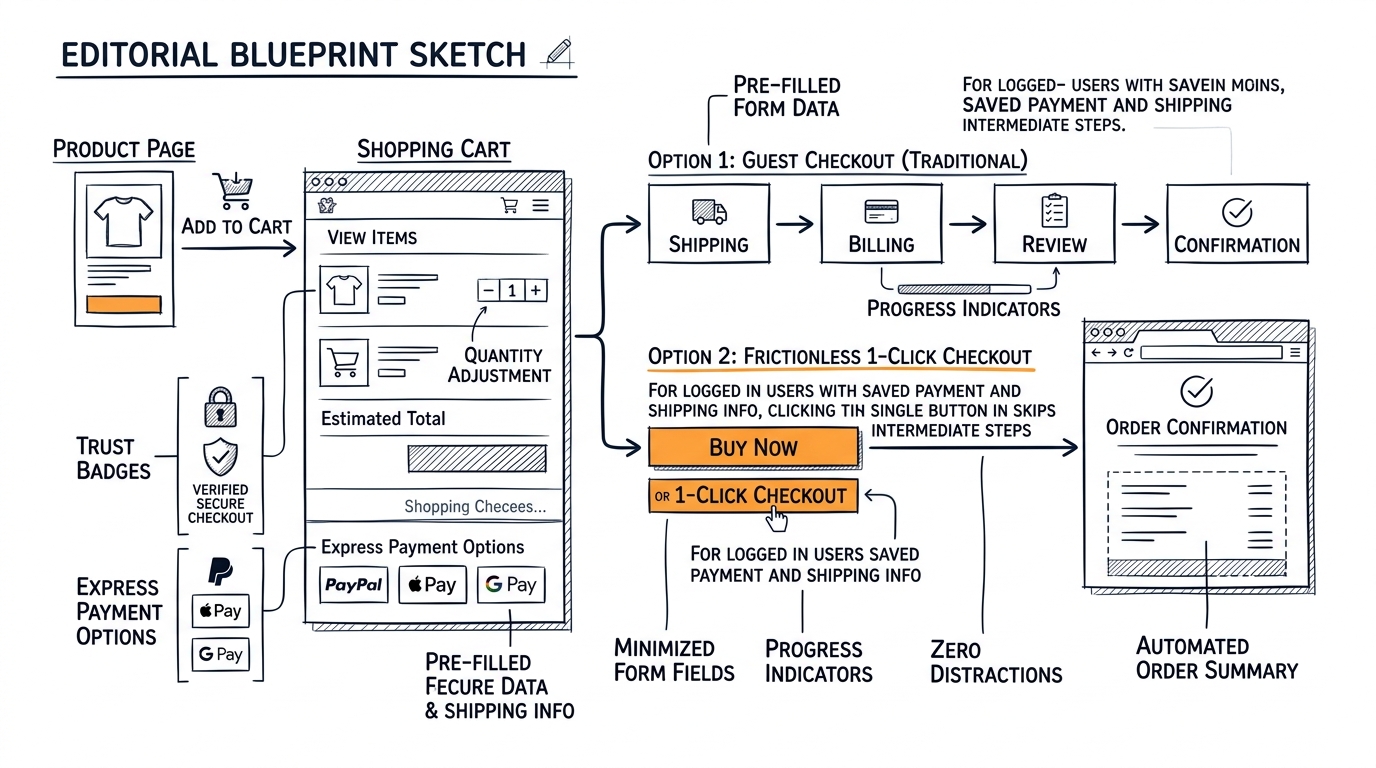
In modern e-commerce engineering, merchants must deploy accelerated payment triggers—including Apple Pay, Google Pay, and Shop Pay—directly on product detail pages and slide-out cart drawers. By allowing authenticated shoppers to bypass traditional five-step billing forms, checkout completion times drop from 120 seconds to under 8 seconds. Prominently placing SSL encryption trust badges and transparent shipping calculators adjacent to the checkout CTA systematically removes subconscious buyer hesitation.
According to technical specifications in the Shopify Checkout Extensibility Documentation, upgrading to modular checkout extensions enables merchants to insert dynamic post-purchase upsells, address auto-completion, and custom loyalty incentives without adding fragile third-party scripts that degrade payment gateway reliability.
Theme performance: Liquid optimization and zero-bloat architecture
The silent killer of Shopify conversion rates is third-party app sprawl. A typical store installs anywhere between 15 to 30 apps for product reviews, popups, countdown timers, and live chats. Each app silently injects render-blocking JavaScript files and external stylesheet requests into theme.liquid, creating massive network contention.
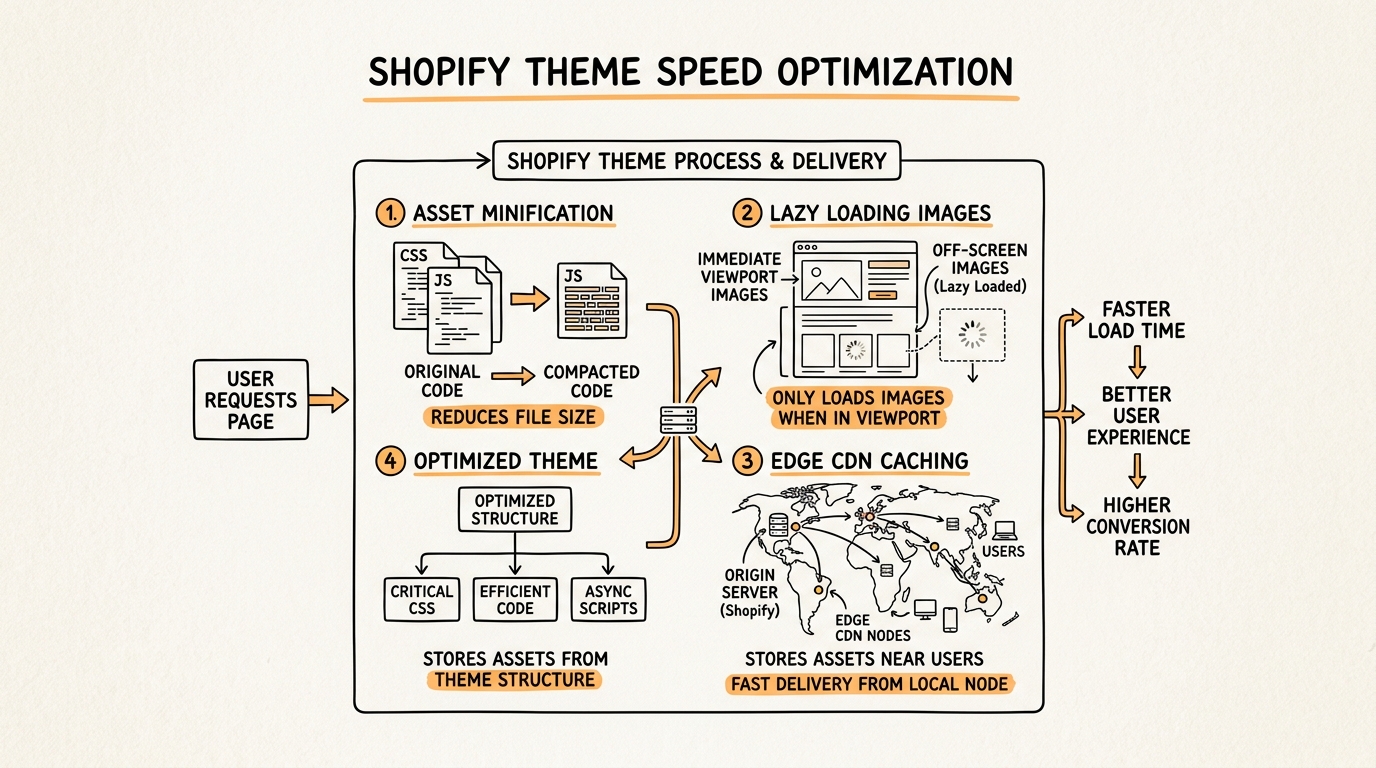
As documented in Google's Core Web Vitals Performance Guide, every 100ms delay in page load speed erodes conversion rates by up to 7%. The newest metric, Interaction to Next Paint (INP), heavily penalizes stores that execute chaotic JavaScript during customer clicks. Denovo's custom theme engineering eliminates this overhead by replacing bloated app dependencies with native Liquid code blocks and lightweight vanilla JavaScript.
Best practices from the Shopify Liquid Reference dictate that high-performance themes must pre-compile critical CSS, defer non-essential analytical scripts until idle intervals, and serve modern AVIF and WebP image formats with strict srcset definitions across Shopify's global edge network.
Mobile-first CRO: The ergonomic thumb zone and sticky triggers
Over 78% of all Shopify transactions in 2026 originate on mobile devices. Yet many stores continue to design for widescreen desktop monitors, simply shrinking elements downward with basic media queries. This fundamental mistake ignores the physical reality of how humans interact with smartphones.

In mobile ergonomics, users navigate almost exclusively with a single thumb. As illustrated in the architectural breakdown above, the upper third of the screen represents an uncomfortable reach zone. High-converting mobile layouts position essential interactive elements—including sticky "Add to Cart" bars, variant selectors, and swipable product thumbnail carousels—directly within the natural thumb sweep arc at the bottom of the viewport.
Furthermore, replacing cumbersome page redirects with an instantaneous AJAX sliding cart drawer preserves user context, allowing buyers to seamlessly adjust quantities, unlock tiered shipping thresholds, and trigger express payments without disruptive full-page reloads.
The compound impact of technical excellence
Maximizing e-commerce conversions is never the result of a single visual gimmick; it is the compound reward of technical discipline across your entire digital stack. By engineering lightning-fast sub-second render speeds, designing specifically for mobile thumb geometry, and stripping away every millisecond of friction at checkout, modern stores transform casual traffic into loyal, repeat customers.
Whether you are scaling past eight figures in annual GMV or launching an ambitious new catalog, your storefront architecture is your most valuable asset. Treating performance and user experience as core engineering pillars guarantees that every marketing dollar invested generates maximum return.