

Every morning, millions of smartphones, laptops, and enterprise servers pop up the exact same quiet prompt: "A system software update is available." For the majority of users, the instinctive reaction is a single click on "Remind Me Tomorrow." Yet in the modern landscape of industrialized cybercrime, that single postponement is often the critical opening an attacker requires to gain persistent access to your digital ecosystem.
"Right now, criminal syndicates don't spend months engineering brand-new zero-days when they don't have to," explains Michael Hensley, Principal Threat Analyst at Denovo Cyber Security Labs. "The second a major vendor like Apple, Microsoft, or Google publishes a security patch, malicious actors immediately reverse-engineer the patch within hours to locate the newly patched flaw. They deploy automated scanners targeting millions of machines whose owners simply chose to wait."
The 15-minute window
Talk to anyone tracking nation-state threat actors or dark-web exploit brokerages, and they will describe the terrifying compression of weaponization timelines. Years ago, it took weeks for threat groups to reverse-engineer software patches and build reliable exploits against disclosed Common Vulnerabilities and Exposures (CVEs). Today, that timeline is measured in minutes.
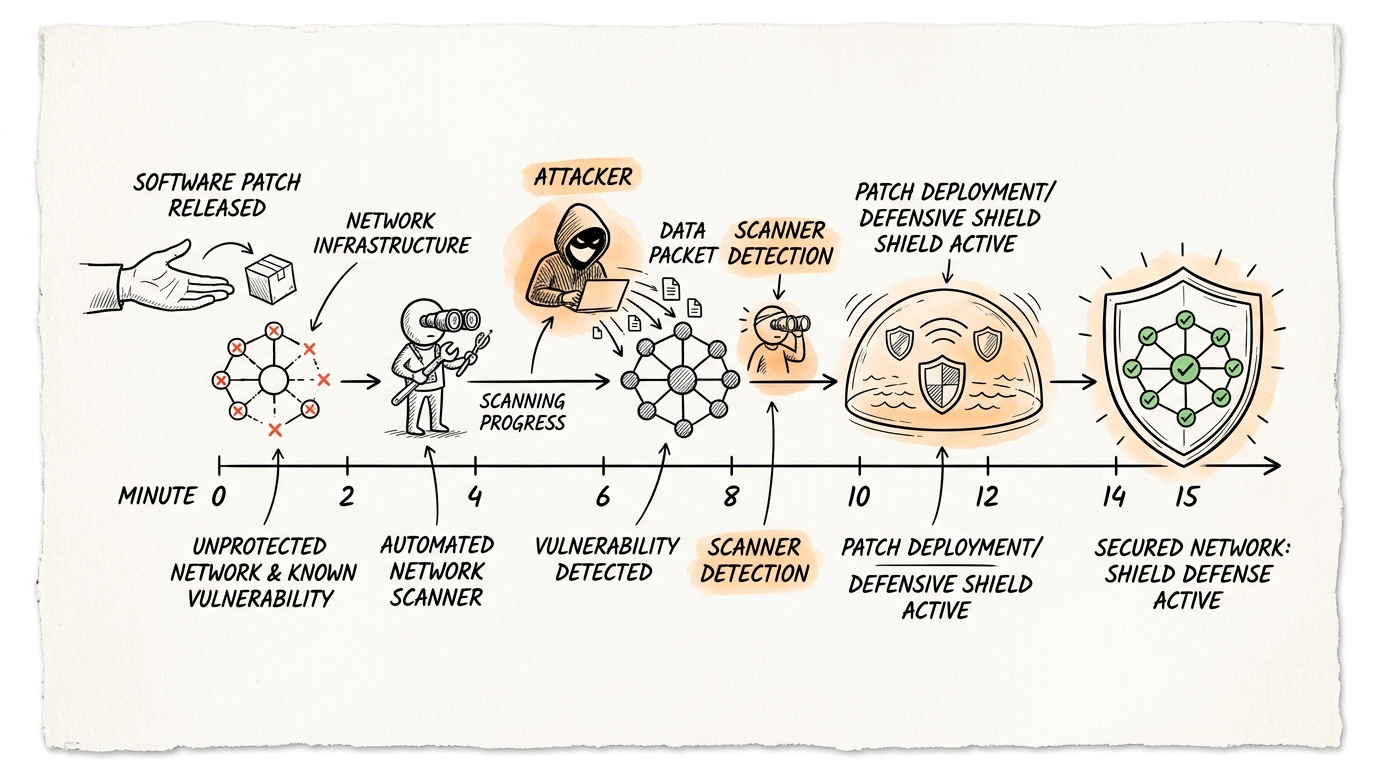
According to live tracking data published by the CISA Known Exploited Vulnerabilities (KEV) Catalog, automated scanning swarms begin probing public IP ranges within 15 minutes of a patch going live. Even devices protected behind standard home firewalls or residential NAT routers can be compromised via drive-by browser scripts that execute quietly while browsing ordinary websites.
Industry research cataloged in the NIST National Vulnerability Database (NVD) shows that over 60% of corporate data breaches exploit known vulnerabilities for which an official patch was already available. As documented under MITRE ATT&CK Technique T1190, attackers prioritize public-facing software weaknesses to establish initial footholds. Aside from ransomware locking databases, unpatched vulnerabilities allow stealthy infostealers to sit silently in device memory, harvesting active session tokens and encrypted keyrings before traditional antivirus software registers anomalous telemetry.
Beyond operating systems: Firmware and peripheral blind spots
When users consider updates, they almost exclusively think about their operating system desktop notifications. However, some of the most dangerous attack vectors exist lower in the stack — inside router firmware, Wi-Fi chipset microcode, camera peripherals, and smart ecosystem hardware.
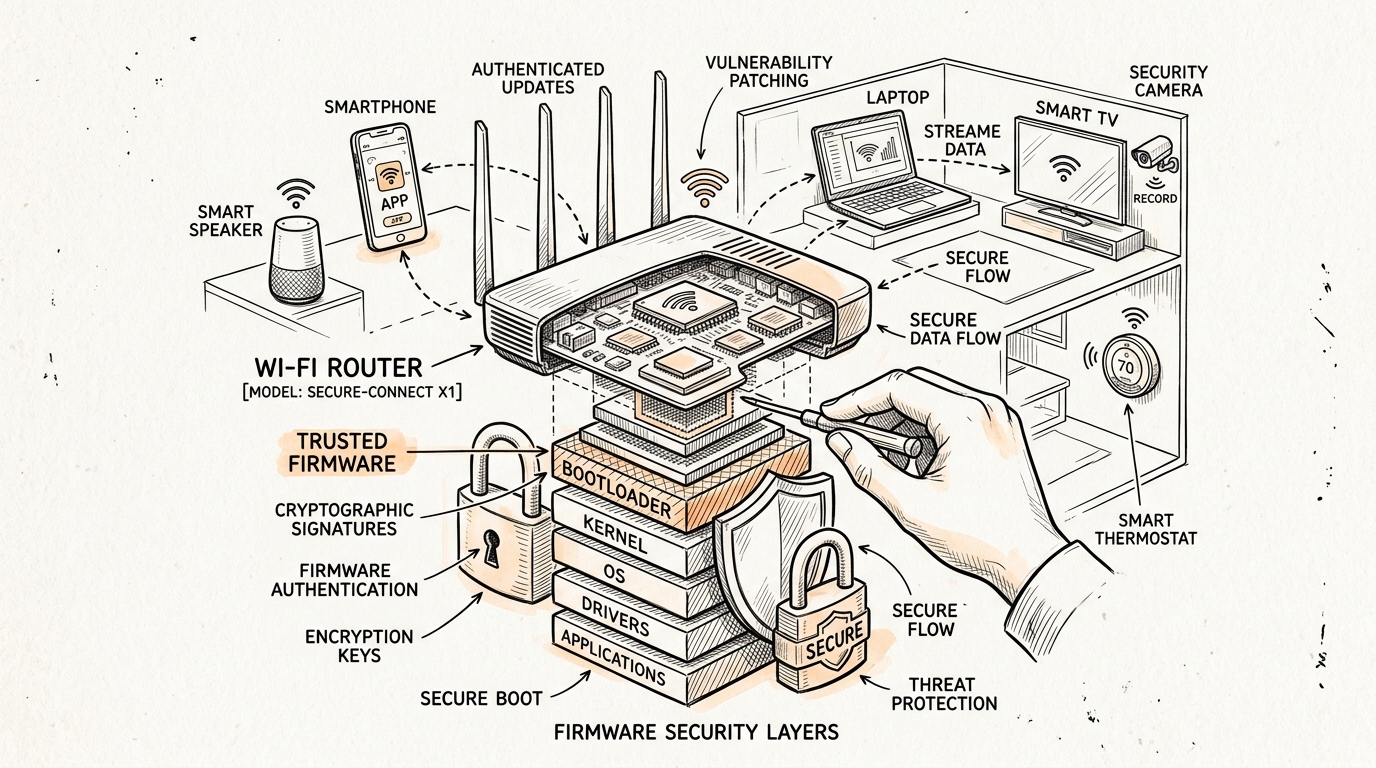
Guidance from the UK National Cyber Security Centre (NCSC) warns that compromised IoT appliances or unpatched residential Wi-Fi routers serve as seamless pivot points. Attackers infect the outdated peripheral, establish persistent command-and-control communication, and execute lateral attacks against connected workstations handling financial records and sensitive customer credentials.
Regular audits of perimeter hardware are therefore just as vital as updating a laptop. The FTC Cybersecurity Guidance strongly urges businesses and remote professionals to inspect router administration panels quarterly, apply vendor microcode patches, and immediately disable unencrypted remote management protocols.
The anatomy of an effective update routine
Building an ironclad defense does not require an enterprise cybersecurity budget; it requires consistent operational discipline. The first imperative is enabling automatic background updates across all operating systems and web browsers. Never rely on manual memory to check for software releases. Vendor mechanisms such as Microsoft's automated servicing pipelines, detailed in the Microsoft Security Response Center, and the rapid response architecture documented in the Apple Platform Security Guide, are engineered to deliver critical memory safety fixes quietly in the background.
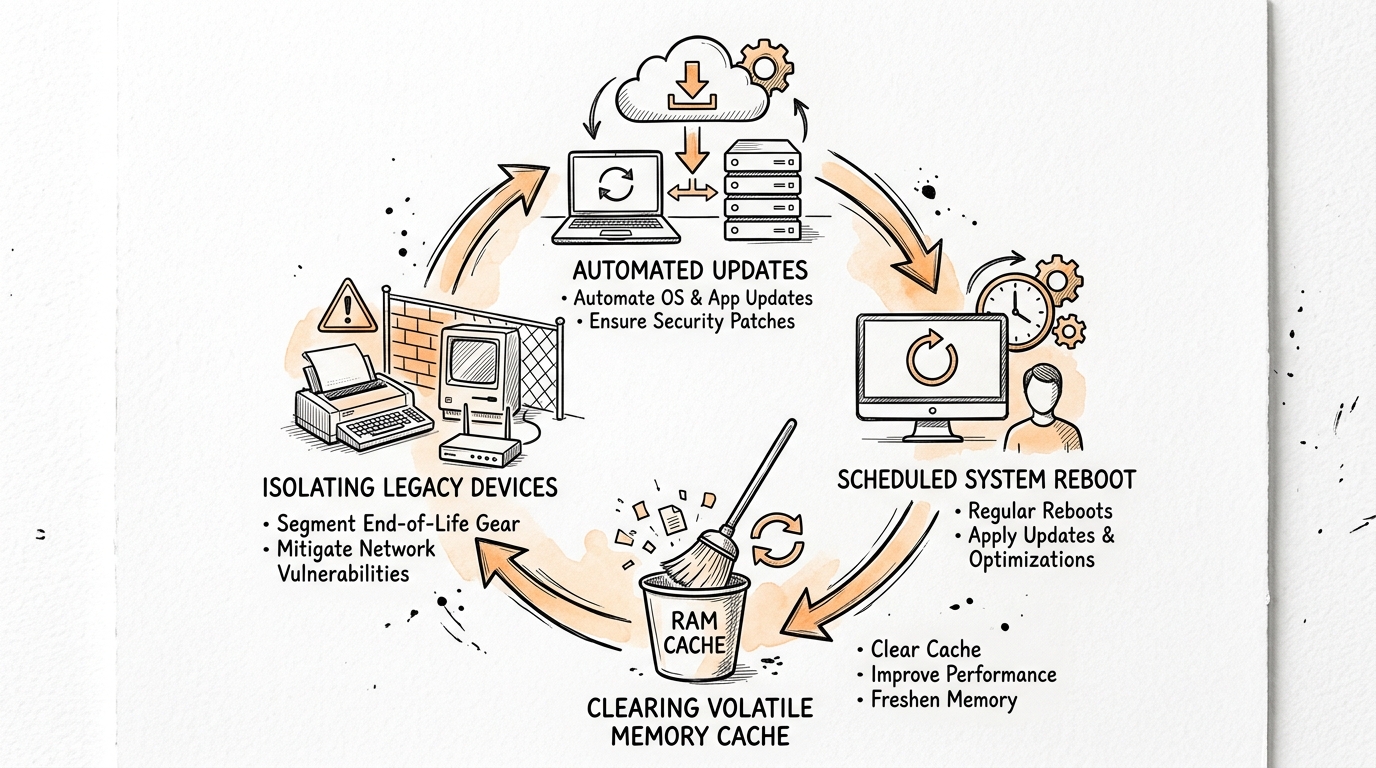
Crucially, downloading a patch is only half the battle. Kernel-level patches and memory-safety mitigations do not take full effect until a system reboot. Leaving laptops asleep or running continuously for weeks leaves previously vulnerable shared libraries active in volatile memory, providing attackers a window of opportunity even if the files on disk have been replaced.
Finally, users must confront the reality of end-of-life (EOL) hardware. When a manufacturer ceases software support for a phone, tablet, or router, that device ceases to receive security fixes for newly discovered attack chains. In professional and home office networks, the safest strategy is to immediately isolate or replace devices that no longer receive official security patches from their creators.
Security as an ongoing operational discipline
Cybercrime has evolved from an opportunistic nuisance into a multi-billion-dollar industrialized enterprise. The perpetrators operate automated scanning engines that search continuously for low-hanging fruit — and an unpatched system is the easiest target in existence.
Protecting your organization and personal identity begins with the simple realization that every software update contains the immune response to newly documented weapons. The next time your screen asks to apply an update and restart, remember: that brief pause is the highest-leverage security investment you will make all day.